
A session plan for Demi Gods VI
Stake steps priced against a budget, the buy translated into spins, the bonus path explained, and a stopping point you choose while you are still calm.
Picking the step: what changes between 0.5 and 500#
The same game behaves differently at each rung of the ladder, and the difference is entirely in how long you get to play. Prizes, lines, modes and the ceiling all scale together; only the number of spins your budget buys moves.
| Stake per spin | Spins from a budget of 500 | Ceiling of one round | Cost of the buy |
|---|---|---|---|
| 0.5 | 1,000 | 450 | 18 |
| 5 | 100 | 4,500 | 180 |
| 50 | 10 | 45,000 | 1,800 |
| 500 | 1 | 450,000 | 18,000 |
Read the second column before the third. A session is a number of spins, not an amount of money, and at the bottom rung the same budget buys a thousand of them against one at the top. The top rung is the opposite proposition: every spin carries weight, and the plan has to account for that before the first press rather than after it.
The useful question is not “how much can this pay” but “how many spins do I want this evening to last”. Pick the rung that answers that, and the rest of the plan follows from it. The RTP page sets out the four published builds and where the ceiling figure comes from.
Medium volatility: what to expect from the rhythm#
Spinomenal rates Demi Gods VI medium, and the paytable is where that rating becomes something you can plan against. Three-symbol prizes run from 5x the bet per line on the J and the ten up to 35x on Asgard, a spread of seven; four-symbol prizes run 10x to 80x, a spread of eight; five on a line runs 30x to 300x, a spread of ten. The fan widens gently as you climb rather than saving everything for the top of the table, and a plan can be built on that.
That is the practical meaning of the rating for a budget. Layer the random 2x or 3x on top and a 25x line on Odin lands as 50x or 75x without any change to your stake, which is a bigger step than moving one rung up the symbol table and it costs nothing.
So the plan does not need a rescue clause for dry spells or a chasing clause for hot ones. It needs a step you can repeat and a length you have chosen, and the arithmetic in the table above is the whole of it.
Buy the round or wait for it?#
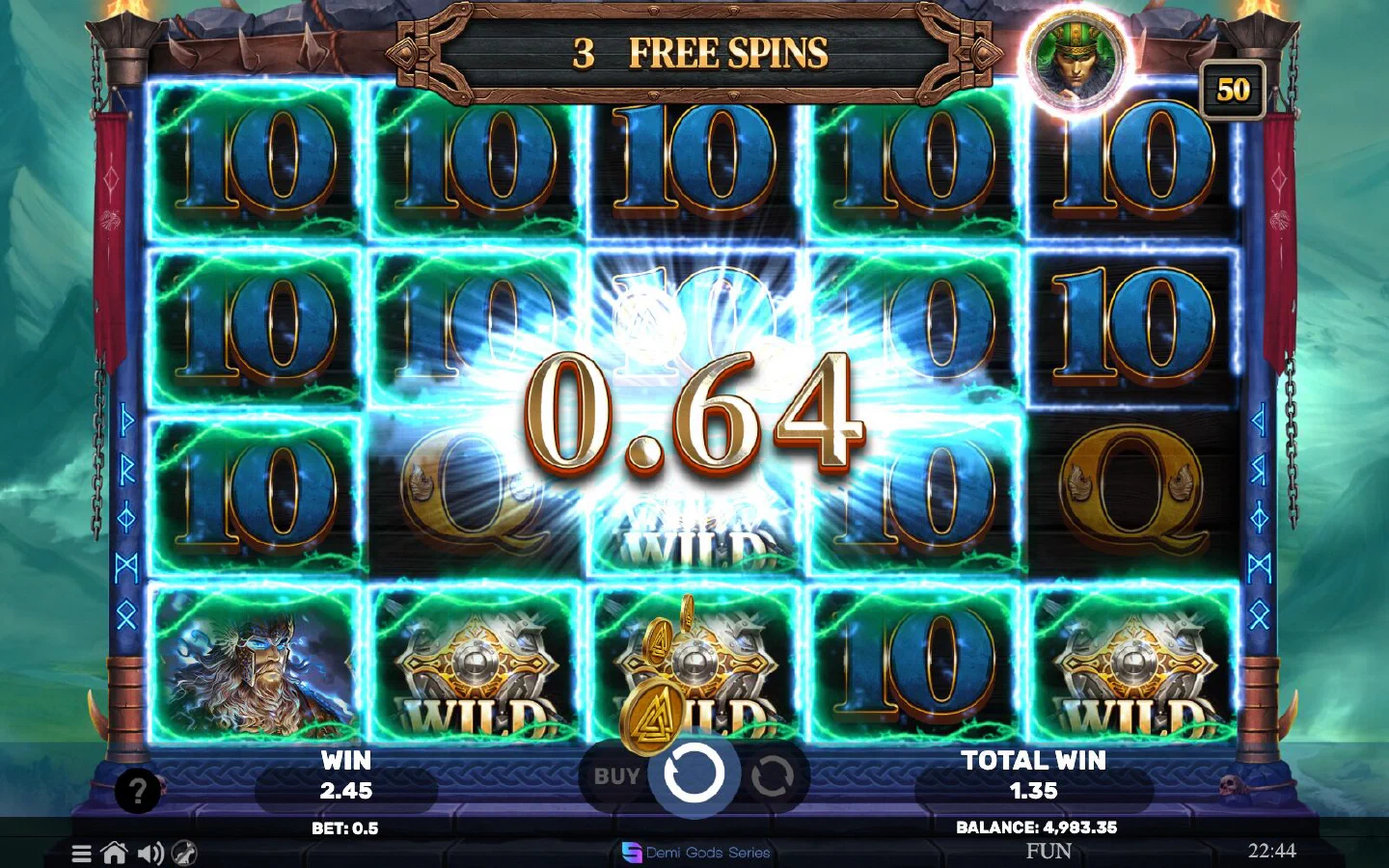
This is the only genuine decision the game asks you to make, so it is worth doing properly. The BUY button charges 36x your total bet and delivers 12 free spins in the Winning Symbols Respin mode. Translate the price into spins and the trade becomes obvious:
| Stake per spin | Cost of the buy | Spins that money would have bought | What you receive |
|---|---|---|---|
| 0.5 | 18 | 36 | 12 free spins, LOKI |
| 5 | 180 | 36 | 12 free spins, LOKI |
| 50 | 1,800 | 36 | 12 free spins, LOKI |
| 500 | 18,000 | 36 | 12 free spins, LOKI |
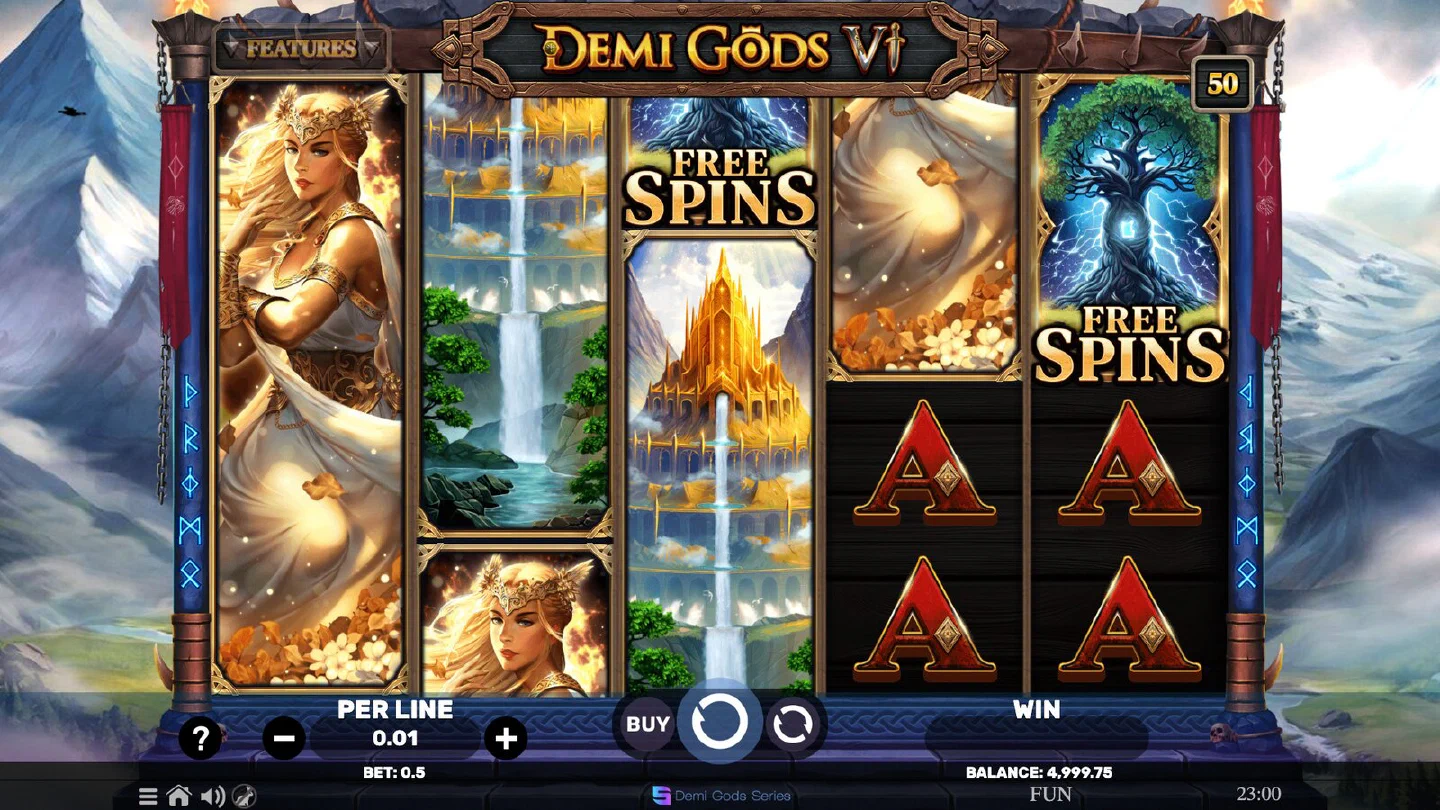
The third column is the same at every rung, because 36x is 36 spins by definition. So the question is not about price at all: it is whether 12 free spins in the first mode are worth more to you than 36 base-game spins, each of which carries 50 live lines, the random multiplier and its own chance of opening the round with three free spins symbols.
One trap worth naming plainly. A price of 36x says nothing whatever about how often the bonus lands by itself. It is a price, in the same way a ticket has a price; read it as a waiting time and you have made up a number of your own. The free path stays open the whole time you are spinning.
A reasonable middle path: decide in advance on a number of buys for the session, say one, and spend the rest of the budget on base spins. That way the decision is made once, while you are calm, instead of repeatedly while you are not.
The free spins path and why finishing it matters#
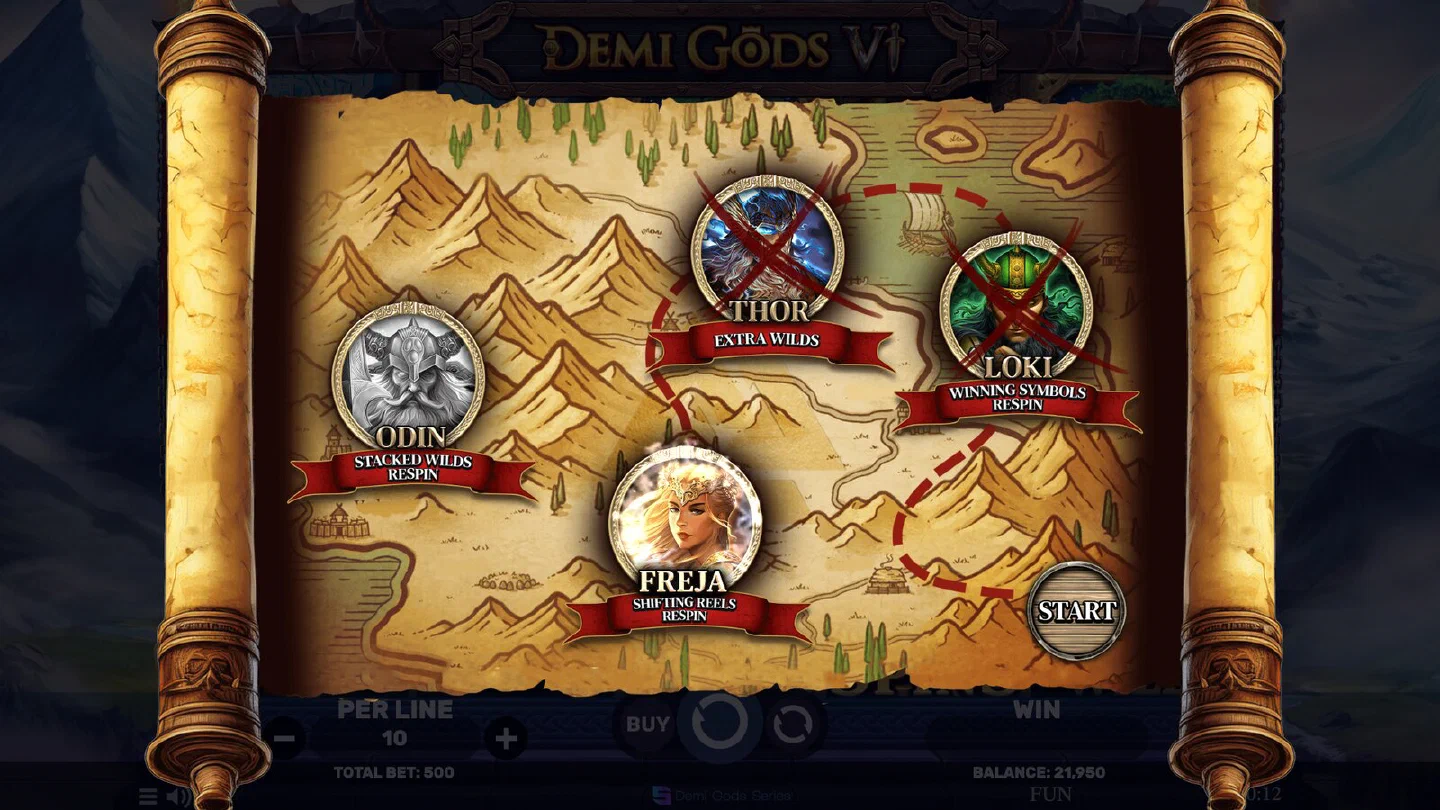
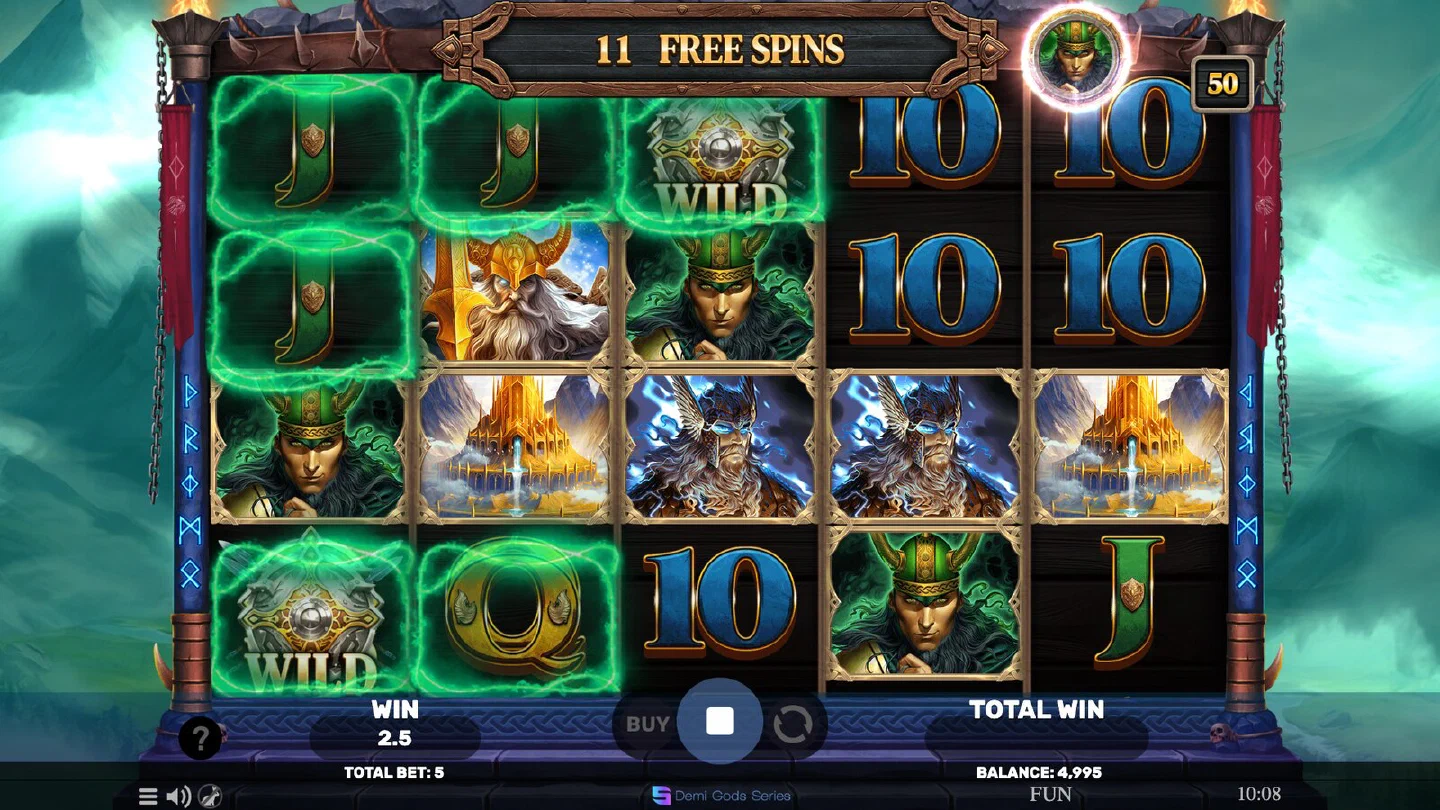
The bonus in this game is a sequence, which changes how you should think about a session that reaches it. LOKI runs a Winning Symbols Respin, THOR adds Extra Wilds, FREJA shifts the reels and respins, ODIN stacks the wilds. They arrive in that order, and the end panel of a round names the next stage rather than leaving you guessing.
The practical consequence: the path carries forward rather than resetting to a draw, so a second visit to the bonus is not a repeat of the first one. A round that triggers on the reels runs 10 or 11 free spins, and a bought one runs 12, so each visit is a real block of play rather than a token three spins.
That is worth building into the plan. Divide your budget by the stake before you start: if the answer is a handful of spins, drop a rung and the same money buys ten times as many. The features page explains what each of the four modes actually changes on the reels.
Session shapes that work#
Rather than a single recommendation, here are three plans that each suit a different evening. All of them spend the same 500 units of stake; what changes is the rung.
The long look, at 0.5 a spin. That budget buys 1,000 spins. This is the plan for getting to know the game: the widest sample of the paytable you can buy for the money, a stake low enough that no single result changes the evening, and room to run one buy inside the session without denting it. The buy costs 18 there, which is 3.6% of the budget and the same money as 36 of those spins.
The focused hour, at 5 a spin. The same budget gives 100 spins. Each result now carries weight, the paytable’s middle tier starts to matter, and a five-symbol Odin line at 200x the bet per line returns 20 on the 0.1 line bet that stake implies. This is the plan where deciding about the buy in advance matters most: at 180 it takes more than a third of the budget, ten times the share it took on the rung below.
The short sharp go, at 50 a spin. Ten spins from the same budget, each of them carrying all 50 lines, with three Asgard worth 35 and five worth 300 at the 1 per line that stake implies, and a buy at this rung costs 1,800, which is 3.6 times the whole budget and therefore off the table. There is an honest case for the rung anyway: some sessions are about seeing what the top of the range feels like rather than about lasting. If that is the plan, make it the whole plan, and set the stopping point at the spin count rather than at a balance.
The point of laying them side by side is that none is more correct than the others. What matters is choosing one before the first press rather than drifting between them as the evening goes.
What the game gives you to work with#
A few parts of the design genuinely change how a plan plays out, and it is worth knowing which they are.
The random 2x or 3x in the base game is the reason low stakes stay interesting. It applies to any win, needs no trigger, and turns the paytable’s ordinary results into occasional notable ones. No decision attaches to it, which is exactly why it belongs in a plan: it is value you receive for staying at the table.
The four-stage Free Spins Journey is the reason session length matters. A round that reaches LOKI is one quarter of the design; the panel announcing the next stage is what turns a second visit into progress rather than a repeat. Budgeting in spins rather than in money is what gives the path somewhere to go, which is a more sensible goal than budgeting towards a ceiling.
The paytable’s lower half is the reason a small stake still gives you something to read. Three of a kind pays on ten different symbols, from 5x the line bet on the J and the ten to 35x on Asgard, and with 50 lines live on every spin those are the results that fill a session. At 0.5 a spin they are worth between 0.05 and 0.35 apiece; at 5 a spin, between 0.5 and 3.5. Small, frequent and exactly what a medium rating promises.
The fixed 50 lines are the reason the plan is simple in the first place. With no line count to adjust, the only lever is the stake step, and a plan with one lever is a plan you can actually keep.
Pace, autoplay and the stopping point#
Autoplay keeps the plan; it does not accelerate it. Set the spin count you decided on, let it run, and use the pause control whenever you want to look at something properly. Quick spin shortens the animation, which is a matter of taste rather than of maths: the same spins happen either way. When a round ends, it closes itself and the win goes to your balance without a further stake to resolve.
The stopping point is the part most plans skip. Choose it in the same breath as the stake, write it down if that helps, and make it something checkable: a spin count, a clock time, or a balance in either direction. Then honour it. What you decide is the step, the pace and the moment to stop; the rest is down to the game’s generator, and that is true at every one of the four RTP builds this slot ships with.

If you want to rehearse the plan before it costs anything, the demo runs the same build on play credits, and the main game page carries the full card. And if the plan is getting harder to keep than it should be, the responsible gambling page has the tools that make it easier.
18+. No way of playing changes the outcome of a spin: what you do decide is the stake, the pace and when to stop. The responsible gambling page has the detail.